
0091-11-25278301


![Asphalt and concrete equipment by :contentReference[oaicite:0]{index=0} including asphalt mixing plant and concrete batching plant machinery](blog-images/323110371f4938d036a5a4a53492cf18.avif)
 Admin
Admin  2026-04-25
 Every road you drive on is the result of carefully coordinated machinery, skilled operators, and high-performance materials working in unison. At the heart of this process is asphalt and concrete equipment — the essential tools that determine whether a road project gets delivered on time, within budget, and built to last.
Whether you are a contractor bidding on a state highway project, an infrastructure developer planning an urban road network, or a project manager overseeing a commercial site, understanding the right equipment makes all the difference. This guide breaks down what you need to know about modern road construction equipment, how it works, and why choosing the right machinery directly impacts your project's success.
Road construction is not a one-size-fits-all operation. Terrain conditions, traffic loads, climate, material specifications, and project scale all influence the type of equipment required. Poor machinery selection leads to inconsistent mix quality, costly delays, rework, and substandard roads that deteriorate faster than they should.
On the other hand, the right asphalt and concrete equipment enables precise material mixing, uniform laying, proper compaction, and efficient curing — all of which translate into durable roads, reduced lifecycle costs, and satisfied clients.
Modern road building relies on a well-defined set of machines, each serving a specific function in the construction chain.
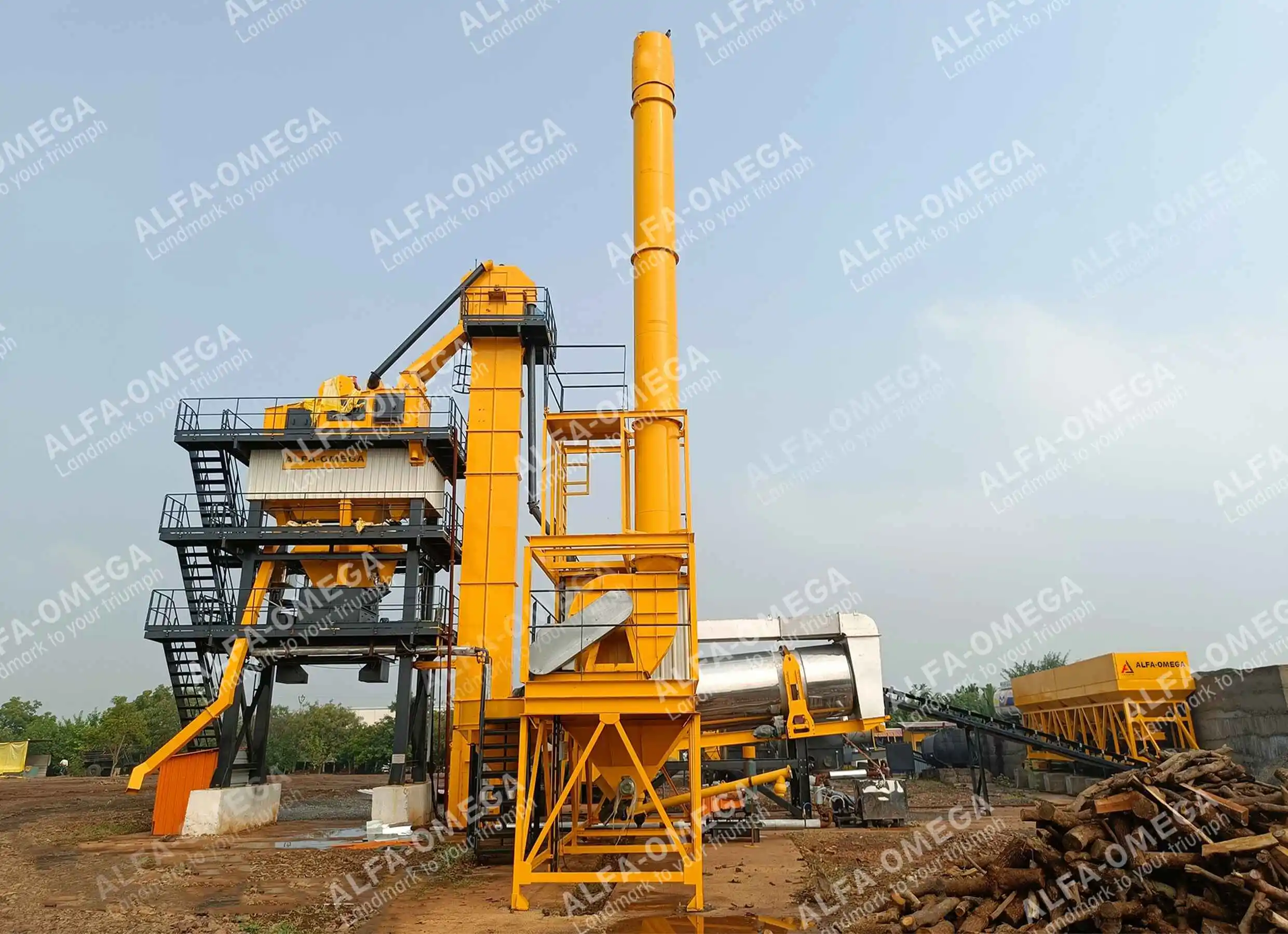
Asphalt batch mix plants produce asphalt in precise, measured batches. This allows for tight control over mix design, making them ideal for projects that demand specific gradation and bitumen content — such as expressways, airport runways, and city roads with heavy traffic.
• High precision in mix quality and bitumen content
• Suitable for projects requiring multiple mix types
• Best for urban road construction and government infrastructure projects
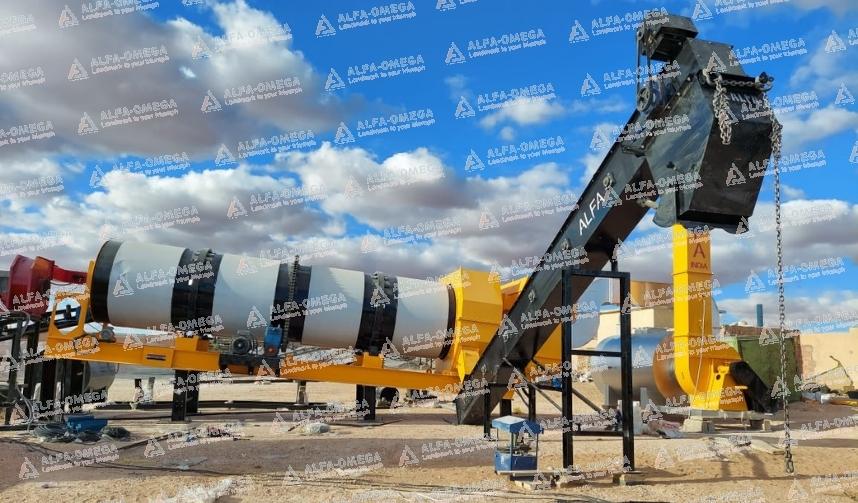
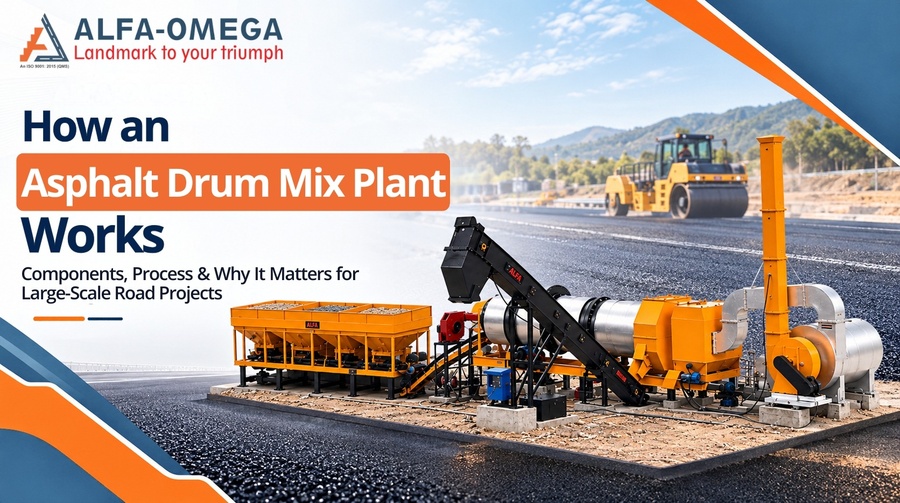
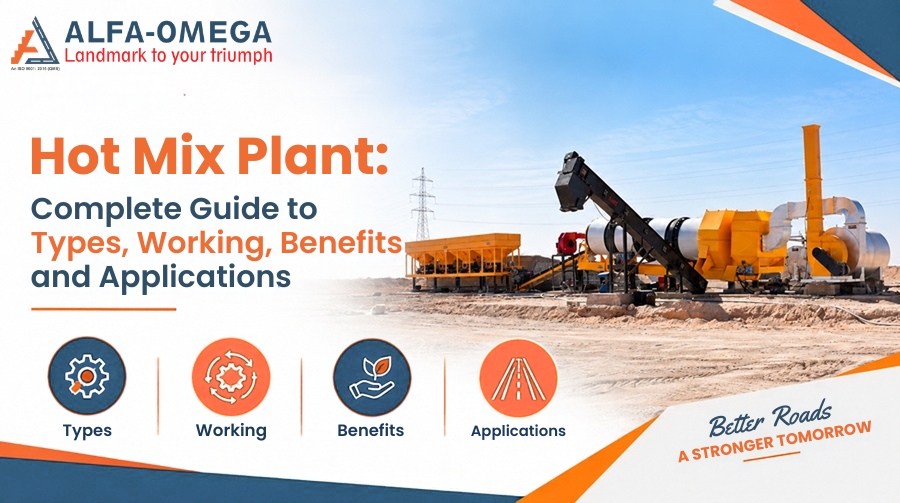
Drum mix plants, or continuous mix plants, produce asphalt in a continuous flow rather than in batches. They are known for high output capacity and operational efficiency, making them the preferred choice for large-scale highway construction, rural road projects, and long-stretch paving jobs.
• Higher production rates compared to batch mix plants
• Lower fuel and operational costs per tonne of output
• Ideal for remote project sites and highway expansion work
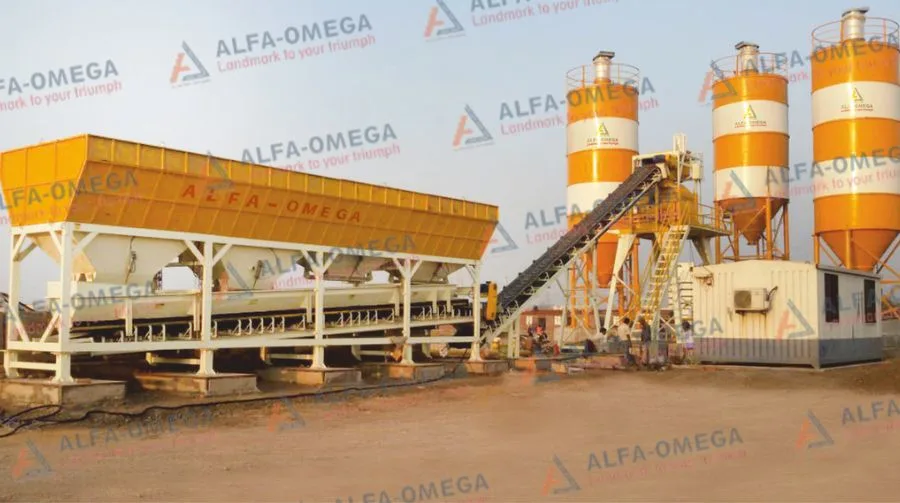
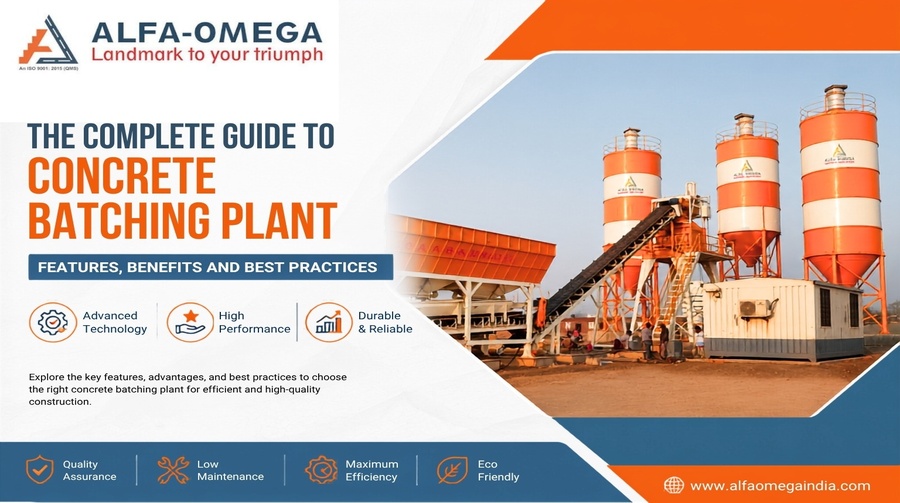
Concrete batching equipment — commonly known as concrete batching plants — mixes cement, water, aggregates, and admixtures to produce ready-mix concrete of consistent quality. This equipment is central to rigid pavement construction, flyovers, bridges, and other concrete-based infrastructure.
• Ensures consistent concrete mix with accurate water-cement ratios
• Available in stationary and mobile configurations
• Supports high-volume production for large civil works and structural projects
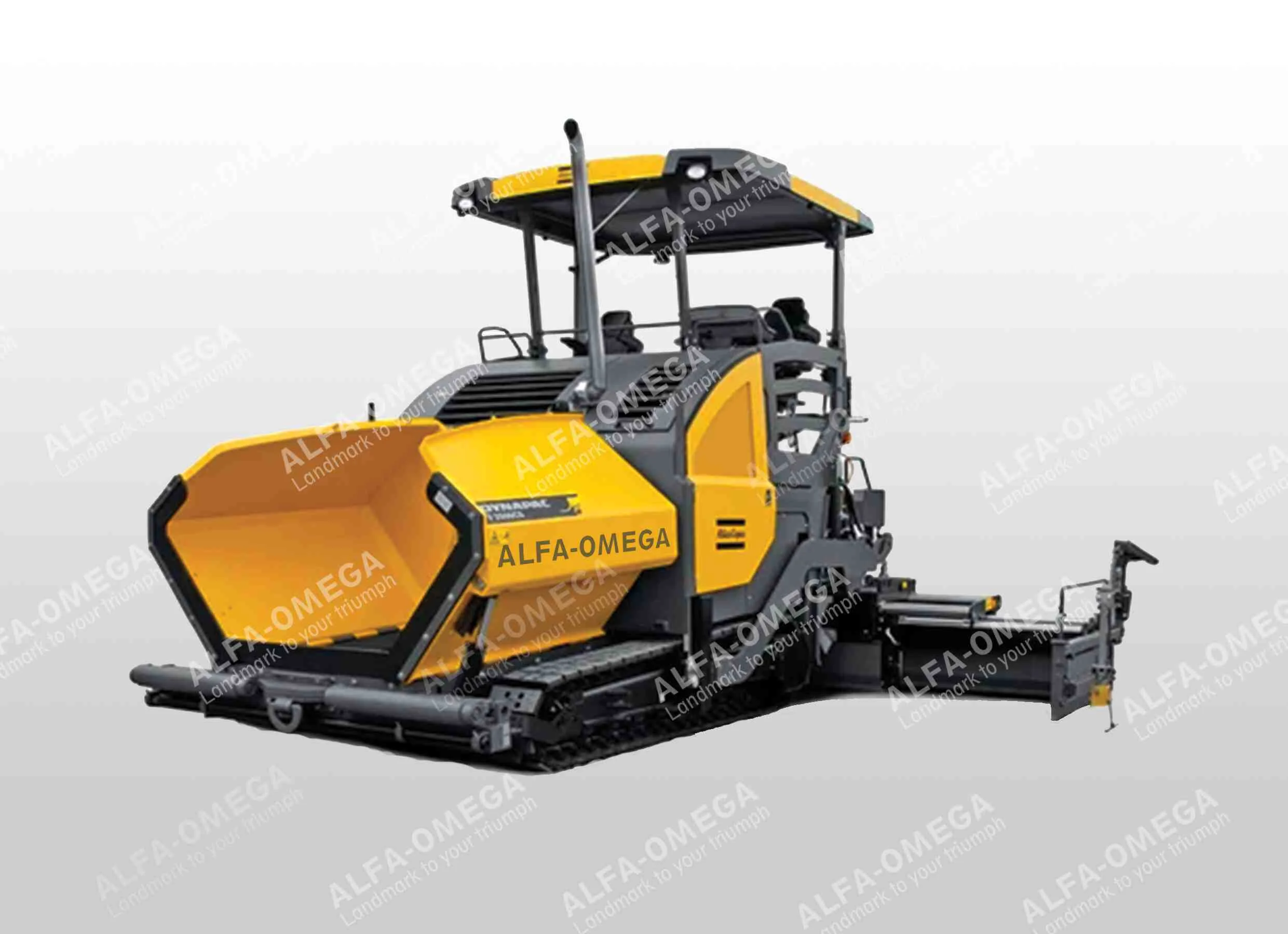
An asphalt paver is the machine responsible for laying hot-mix asphalt across road surfaces in a uniform, controlled manner. Modern pavers feature automated screed controls, grade sensors, and material feed systems that ensure consistent thickness and smoothness across every metre of road laid.
After laying asphalt or concrete, proper compaction is what determines pavement density, stability, and long-term load-bearing capacity. Drum rollers, pneumatic tyre rollers, and vibratory compactors are all part of this critical phase. Insufficient compaction is one of the leading causes of premature road failure.
The construction industry has seen significant technological advancement in asphalt plant machinery and concrete equipment over the past decade. Today's machines come equipped with PLC-based automation systems, real-time monitoring dashboards, dust collection units, and energy-efficient burner technologies.
Key operational benefits include:
• Reduced material wastage through precision batching and automated controls
• Faster project completion through higher output rates and reliable uptime
• Improved compliance with environmental and emission standards
• Lower lifecycle costs through durable construction and easy maintenance
• Consistent quality output that reduces rework and inspection failures
For contractors and infrastructure companies competing on tight margins, these efficiencies are not just conveniences — they are business-critical advantages.
Selecting the right construction machinery manufacturer is as important as selecting the equipment itself. A reliable manufacturer doesn't just sell machines — they provide after-sales support, spare parts availability, operator training, and site commissioning services that keep your equipment running at peak performance.
Evaluate manufacturers based on:
• Track record and years of experience in road construction equipment
• Range of product offerings — from asphalt mixing plants to concrete batching equipment
• Quality certifications and compliance with industry standards
• Availability of genuine spare parts and technical support teams
• Customer testimonials and case studies from similar project types
Alfa Omega India is one such trusted name in the industry. With a comprehensive product portfolio covering asphalt batch mix plants, drum mix plants, concrete batching plants, and related road construction equipment, Alfa Omega India has built a reputation for engineering-grade reliability and customer-first service across infrastructure projects in India and beyond.
Asphalt and concrete equipment play a role across virtually every category of civil infrastructure. Some common project applications include:
• National and state highway construction and expansion
• Urban road and flyover development in metro cities
• Airport runway resurfacing and tarmac construction
• Industrial estate and logistics park road networks
• Rural road development under government schemes like PMGSY
• Road maintenance and rehabilitation of deteriorated surfaces
A batch mix plant produces asphalt in individual, weighed batches — giving you precise control over each mix. A drum mix plant, by contrast, produces asphalt continuously in a rotating drum, offering higher output rates and better cost efficiency for large-scale projects. The right choice depends on your project's mix complexity and volume requirements.
Asphalt pavements are flexible, faster to construct, easier to repair, and better suited for moderate-traffic roads and urban environments. Concrete pavements are rigid, offer greater compressive strength, and have a longer service life — making them ideal for heavy-traffic corridors, industrial roads, and airport runways. Your choice should be guided by traffic volume, axle loads, climate, and lifecycle budget.
For major highway projects, plants with a production capacity of 120 to 240 tonnes per hour are commonly used. For smaller roads or city-level projects, a 40 to 80 TPH capacity plant may be sufficient. Your project engineer or equipment supplier can help you calculate the required capacity based on paving speed targets and daily laying requirements.
Regular preventive maintenance is critical for all road construction equipment. This typically includes daily inspections of wear components, lubrication of moving parts, cleaning of filters and screens, calibration of weighing systems, and periodic inspection of electrical and hydraulic systems. Partnering with a manufacturer that offers dedicated after-sales support significantly reduces unplanned downtime.
Yes. Most modern asphalt mixing plants are designed for portability. Mobile and semi-mobile variants can be dismantled, transported, and commissioned at a new site within a few days. This flexibility is particularly valuable for contractors working across multiple geographies or remote locations where setting up permanent infrastructure is not practical.
Infrastructure development is one of the most capital-intensive and time-sensitive sectors in any economy. The quality of roads you build reflects the quality of the equipment you invest in. From high-efficiency asphalt mixing plants to precision concrete batching equipment, every machine in your fleet plays a direct role in the durability, safety, and performance of the roads you deliver.
As infrastructure demands grow across India and emerging markets, construction businesses that invest in reliable, modern asphalt and concrete equipment are the ones that win contracts, maintain margins, and build lasting reputations. Choose your equipment wisely, partner with a trusted construction machinery manufacturer, and ensure every project you undertake is built on a foundation of performance and precision.
Looking for industry-grade road construction equipment? Explore Alfa Omega India's complete range of asphalt batch mix plants, drum mix plants, and concrete batching equipment at alfaomegaindia.com — and speak to our team about the right machinery solution for your next project.

Alfa Omega India is unique born global company founded in 1999 with its head office in the capital of India – New Delhi.
About More
Copyright © 2026 Alfa Omega Enterprises. All rights reserved.

 WhatsApp Chat
Request A Quote
WhatsApp Chat
Request A Quote

Leave a Reply
Your email address will not be published / Required fields are marked *